Read more here.
Sunday, March 31, 2013
Easter is today
Each afterlife realm has a theme for learning. The physical realm exists for us to test our ideals and learn from them. (David Oakford)
How we lived our life on Earth determines which heavenly realm we have earned and travel to after death. We choose our own pace through the afterlife realms. (Betty Bethards)
The afterlife realms are experiences of enjoyment and recreation. People do things they enjoy and keep company with people they enjoy in a realm of joyful activity. The skills, interests, and abilities developed on Earth may be reflected in the roles chosen in eternity. We contribute uniquely toward the goodness and beauty in the realm we inhabit which is vast and of transcendent beauty. Our quality of life in spirit is directly affected by our heart and activities on Earth. Opportunities for practicing love continues. (Nora Spurgin)
Read more here.
Read more here.
Thursday, March 14, 2013
Sunday, March 10, 2013
Friday, March 8, 2013
Achieve Epic Wins
Jane McGonigal talks about how game-playing can save the world - it's about the "feeling" you have when playing a game (online game) that feeling of positive achievement, hope - that you can overcome any obstacles, be the best version of yourself - achieve 'epic wins". We need this! For me, it's a love of life with all of its inherent struggles; it's a love and empathy for all sentient beings who have their share of struggles, too.
Wednesday, March 6, 2013
Thursday, February 28, 2013
Magic Realism
I created this video in the "Magic Realism" genre of filmmaking. After finishing my video today, I realized that this video represents how I have been transformed recently: driving through the dark tunnel represents my transformation back into being creative... like a "rebirth" of my creativity... the moon represents the universe that "loves" me and wants me to be creative... the rain and thunder represent my fears and struggles... the tea, rainbow, and cake represent how I long for security, comfort and beauty (flowers on the tea kettle) in my life... the lightning represents creative inspiration... the girl swimming underwater represents that I keep searching and trying to find my way.
Thursday, February 21, 2013
Black History Month (is not over)
—Martin Luther King Jr., 1954

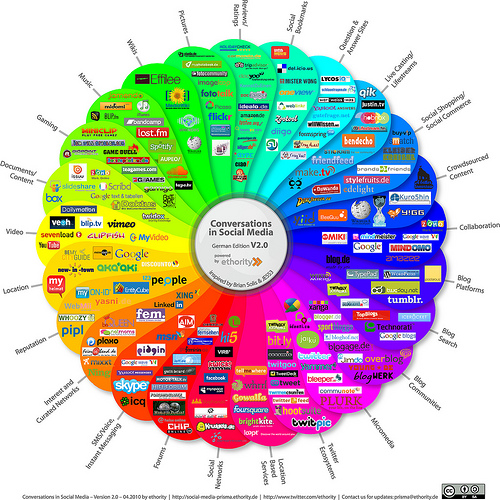
Some networks and tools to make your social life easier because the last thing most of us want are more sites to scour through. These tools will help you reclaim time in your schedule without missing a beat. See original article here.
Digital Storytelling
Digital Storytelling from Helen Barrett
This is from my Full Sail University Graduate Course in Filmmaking - my favorite course!
More presentations by Helen Barrett can be seen here.
From my filmmaking course:
This is from my Full Sail University Graduate Course in Filmmaking - my favorite course!
More presentations by Helen Barrett can be seen here.
From my filmmaking course:
Seven Elements of Digital Storytelling
by Mike King on 28 June 2011
Prezi transcript
The Seven Elements of Digital Storytelling A Point of View Stories are told to make a point and should not be presented as a recitation of mere facts. Define the premise of your story so that all parts can serve to make the point. Consider your audience and direct the point to them. A Dramatic Question You want to capture your audience’s attention at the beginning of the piece and hold their interest throughout. Typically you want to pose the dramatic question in the opening lines and resolve it in the closing lines. Emotional Content Emotional content can help hold your audiences attention. The images, effects, music and tone of voice all lend to contributing emotion to the piece. Try to keep the elements consistent with the emotion of the moment. Voice Most likely the first time you heard your recorded voice you couldn’t stand the way it sounded. And you still can’t. Suggestion….get over it! Your voice is a great gift and even thought you don’t like to hear it, others do. If you “read” your script your audience will not know how to react. Take time to learn and practice your script so you can speak in a conversational voice. Record several takes and select the best one. Trust that your audience will think it is perfect. The Soundtrack Music is a big plus to a digital story. The right music can set the story in time and can convey emotion. Play music behind an image and a specific emotion is generated. Change the music behind the same image and an entirely different emotion isexperienced. Sound effects can add tension and excitement to a piece, but be careful,they can be a distraction too. Economy Plan to leave some of your work on the “cutting room floor”. A compact, fast moving digital story will contain only those elements necessary to move the audience from beginning to end. We know that our brains are constantly filling in (from our own experiences) details from suggestions made by sights and sounds. Don’t give every minute detail to clarify your story, let your audience fill in some of the blanks. Pacing The rhythm of the piece is what keeps your audience’s interest in the story. Changing pace within the story can facilitate moving the audience from one emotion to another. Music tempo, speech rate, image duration, and panning and zooming speed all work to establish pace. Generally pace will be consistent, but one in a while it will pause, accelerate, decelerate, stop or blast-off. Trust your own senses, we all move at our own pace.
More resources for digital storytelling: Kurt Vonnegut at the Blackboard
Saturday, February 9, 2013
What would you do if you could do anything you wanted in life?
I LOVE LOVE LOVE this video. I am doing what I want in life. It took a lot of sacrifice, struggle, resilience. I LOVE my life. I look forward to each day... I look back on my life and understand... I don't tell my children what to do, I tell them to think for themselves.
Wednesday, February 6, 2013
The Moon is a Cookie
In my motion graphic video, I am interviewed by Lyn de l'Eau, a Ph.D. candidate at San Francisco University, for her class on the constructionist theory in learning. If you care to comment, please use the RISE Model developed by Emily Wray.
Subscribe to:
Posts (Atom)